

Affiliate disclosure: This post contains affiliate links, which means I may earn a commission if you book through my links, at no extra cost to you. Thanks for supporting Exploring with Rhi! 💛
Planning your first trip to Japan and not sure where to start?
If you've got two weeks to explore, you're in for an incredible adventure! There is something new around every corner in Japan.
From the bright lights and endless shopping streets of Tokyo, to the traditional temples of Kyoto, the incredible food in Osaka and the important history of Hiroshima, there's so much to experience.
But with so many places to visit, planning your first Japan holiday can quickly become overwhelming.
Where should you go? How many days should you spend in each city? Which attractions are worth visiting? And how do you get around without spending half your holiday travelling between destinations?
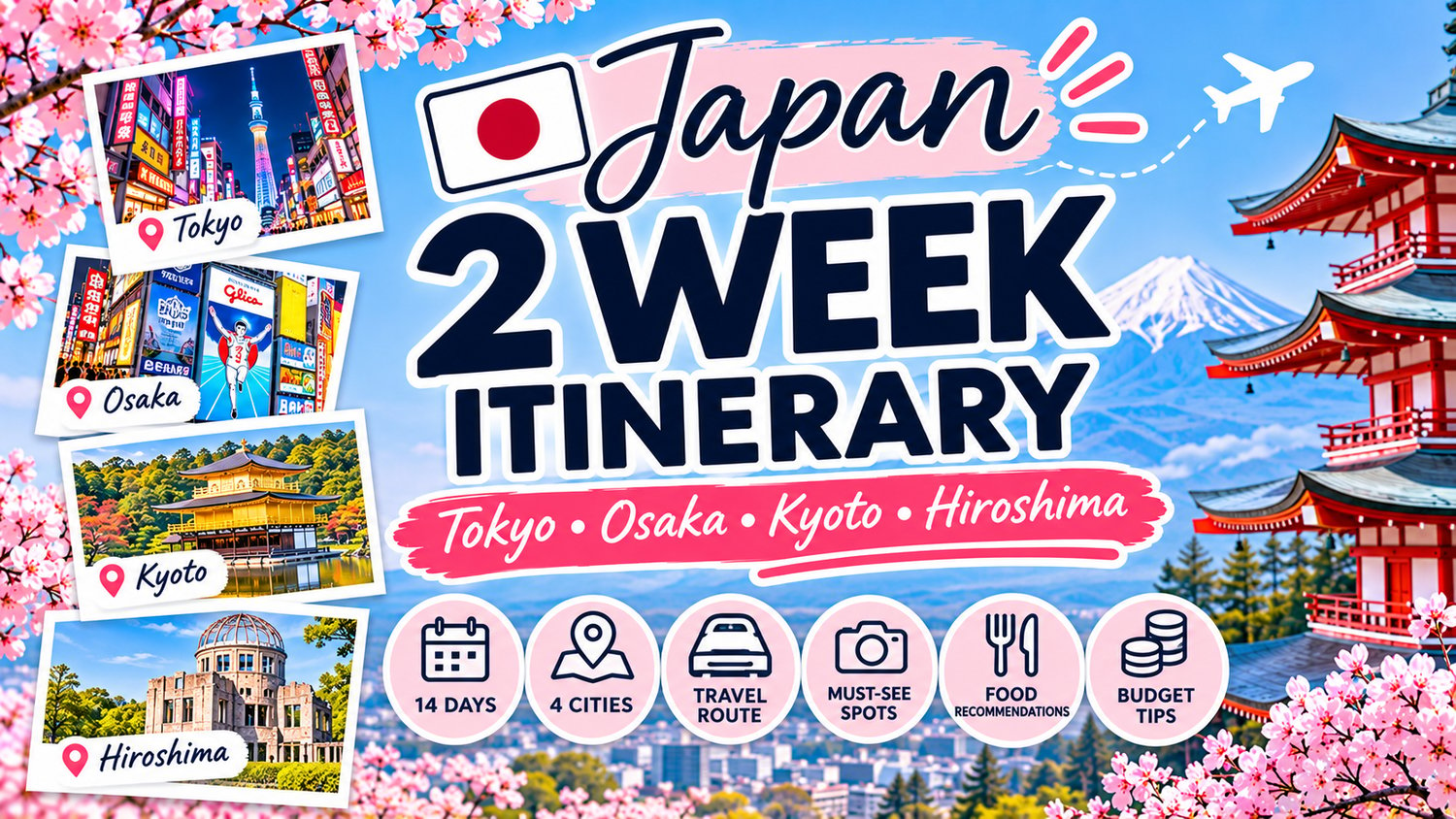
We've put together a 14-day Japan itinerary designed specifically for first-time visitors. It covers four incredible destinations, while keeping accommodation changes to a minimum.
You'll spend your first six nights in Tokyo before travelling to Osaka, which will become your base for exploring the Kansai region, including Kyoto and Hiroshima.
This itinerary includes:
- Six days exploring Tokyo.
- Two days visiting Kyoto.
- A full day exploring Hiroshima.
- Time to experience Osaka.
- Two full days at Tokyo Disney Resort.
- A full day at Universal Studios Japan.
- Plenty of opportunities to experience Japanese food, culture and shopping.
The best part? You'll only need to change accommodation once!
Your 14-day Japan itinerary at a glance
Days 1-6: Tokyo (6 nights)
Day 7: Tokyo to Osaka (1st Osaka night)
Days 8-13: Osaka, Kyoto & Hiroshima (6 nights)
Day 14: Time to head home!
Your route
Tokyo → Osaka → Kyoto (day trips) → Hiroshima (day trip)
Arrival airport
Tokyo Haneda or Narita
Departure airport
Kansai International Airport (KIX)
Accommodation changes
One
Main transport
Local trains, subway and Shinkansen.
This itinerary assumes you're flying into Tokyo and departing from Osaka. We'd recommend looking at multi-city flights rather than booking a return flight from Tokyo, as this saves you travelling back across the country at the end of your trip.
Before you go: What to organise
Before getting into the day-by-day itinerary, there are a few things worth organising ahead of time.
1. Book your flights
Start by comparing flights from Australia to Tokyo. If possible, look for flights arriving at either Haneda or Narita Airport, and departing from Kansai International Airport in Osaka.
Flying into one city and out of another can save you time and additional transport costs.
2. Organise your accommodation
You'll only need accommodation in two locations: Tokyo for 6 nights and Osaka for 7 nights.
We recommend choosing accommodation close to a train station, particularly if you're planning to use public transport throughout your trip.
3. Book your popular attractions
Some of Japan's most popular attractions require advance bookings or have limited availability. If you are planning to visit any of the below attractions, we'd suggest booking early to avoid missing out.
- Tokyo Disneyland.
- Tokyo DisneySea.
- Universal Studios Japan.
- Warner Bros. Studio Tour Tokyo, if you're interested.
4. Plan your transport
You'll use a combination of local trains, subway services and the Shinkansen. An IC card such as Suica or PASMO can make paying for local transport much easier.
You don't automatically need a Japan Rail Pass. For this itinerary, individual tickets may offer better value.
5. Organise your travel budget
Japan can be surprisingly affordable, but accommodation, attractions, transport, shopping and food can quickly add up.
Work out a rough daily budget before you leave, and remember to include your major attractions.
Want to keep all your travel plans organised?
Our Japan Trip Planning Dashboard was designed to help you organise your entire holiday in one place.
You can track your flights, accommodation, transport, attractions, daily itinerary, spending and savings.
Get the Japan Trip Planning Dashboard!
Days 1–6: Exploring Tokyo
Tokyo is an incredible place to start your Japan adventure.
It's busy, colourful and full of things to see and do. From traditional temples and shopping districts to themed attractions and incredible food, you could easily spend weeks exploring the city.
For this itinerary, we're allowing six nights so you have enough time to experience the highlights without rushing.
Day 1: Arrive in Tokyo
Welcome to Japan!
Depending on your flight time, your first day will probably be fairly relaxed.
Once you've arrived at the airport, cleared immigration and collected your luggage, make your way to your accommodation. After checking in, we'd recommend keeping things simple.
- Explore the area around your hotel.
- Visit a nearby convenience store.
- Pick up some Japanese snacks and drinks.
- Have your first Japanese meal.
- Get some rest and adjust to the time difference.
Don't try to fit too much into your first day. International flights can be exhausting, and you'll want plenty of energy for the days ahead.
Day 2: Asakusa and traditional Tokyo
Today is all about experiencing a different side of Tokyo. Start your morning in Asakusa, one of the city's most traditional neighbourhoods.
Senso-ji Temple
Visit Tokyo's oldest and one of its most famous Buddhist temples. Walk through the impressive Kaminarimon Gate before exploring Nakamise Shopping Street, where you'll find traditional snacks, souvenirs and plenty of little shops.
Nakamise Shopping Street
Take your time browsing the stalls and trying some Japanese street food.
Tokyo Skytree
If you want a beautiful view over Tokyo, head to Tokyo Skytree. You can purchase observation deck tickets for panoramic city views.
Ueno Park
If you have time, head towards Ueno for a relaxing walk around the park and surrounding area.
Finish your evening with dinner nearby.
Day 3: Shibuya and Harajuku
Today you'll experience some of Tokyo's most recognisable neighbourhoods.
Start in Harajuku before making your way towards Shibuya.
Takeshita Street
Explore the colourful shopping street known for its fashion boutiques, quirky shops, sweet treats and Japanese pop culture.
Meiji Jingu Shrine
Take a break from the busy streets and visit this beautiful Shinto shrine surrounded by a peaceful forest.
Shibuya Crossing
You can't visit Tokyo without seeing the famous Shibuya Crossing! Watch the crowds move through one of the world's busiest pedestrian crossings before exploring the surrounding shopping district.
Hachiko Statue
Stop by the famous statue of Hachiko, the loyal dog who became a symbol of devotion.
Shibuya Sky
If you want an incredible view of Tokyo, book a ticket for Shibuya Sky. It's particularly beautiful around sunset, so consider booking an evening time slot in advance.
Day 4: Tokyo Disneyland
It's Disney day!
Tokyo Disneyland is one of the most popular attractions in Japan and is well worth dedicating an entire day to. The park has a mix of classic Disney attractions, themed lands, entertainment, parades and character experiences.
Things to experience:
- World Bazaar.
- Fantasyland.
- Adventureland.
- Westernland.
- Tomorrowland.
- Popular rides and attractions.
- Disney parades and entertainment.
I'd recommend arriving early and having a rough plan for the attractions you most want to experience.
Important: Tokyo Disney Resort tickets are date-specific. The official website currently releases tickets at 2pm Japan time, two months before the admission date. Check the latest availability and booking conditions before your visit.
Book your Tokyo Disneyland tickets here!
Day 5: Tokyo DisneySea
If you love Disney, don't skip DisneySea!
Tokyo DisneySea is a completely different experience from Disneyland, with incredible themed areas, immersive attractions and beautiful scenery. It's one of the most unique Disney parks in the world.
Things to experience:
- Mediterranean Harbor.
- Mysterious Island.
- Mermaid Lagoon.
- Arabian Coast.
- Fantasy Springs.
- Popular rides and attractions.
- Evening entertainment.
Like Disneyland, you'll want to spend a full day here.
Our tip: Don't try to squeeze both Disney parks into one day. Give each park its own day so you can enjoy the experience properly.
Book your Tokyo DisneySea tickets here!
Day 6: Harry Potter or more of Tokyo
For your final full day in Tokyo, you've got a couple of options.
Option A: Warner Bros. Studio Tour Tokyo – The Making of Harry Potter
If you're a Harry Potter fan, this is a must do experience. Explore authentic film sets, costumes, props and behind-the-scenes secrets from the Harry Potter films.
You'll get to walk through recreated locations such as:
- The Great Hall.
- Diagon Alley.
- The Forbidden Forest.
- Platform 9¾.
- Hogwarts classrooms.
Allow several hours for the experience. Many visitors spend a large part of the day exploring the studio.
Tickets must be booked for a specific date and time, and advance booking is recommended.
Official website: https://www.wbstudiotour.jp/en/
Option B: Explore more of Tokyo
If Harry Potter isn't your thing, use today to explore somewhere different.
Some ideas include:
- Akihabara for anime, gaming and electronics.
- Ginza for shopping and department stores.
- Shinjuku for shopping, food and nightlife.
- teamLab Planets for an immersive digital art experience.
- Odaiba for waterfront attractions and shopping.
You could also use this as a slower day to catch up on anything you missed.
Day 7: Travel from Tokyo to Osaka
Today you're heading to your second accommodation base.
It's time to experience the Shinkansen! The journey from Tokyo to Shin-Osaka takes approximately 2.5 hours on the fastest Nozomi services.
We recommend booking a reserved seat so you know exactly where you'll be sitting.
If you're travelling with larger suitcases, remember to check the oversized luggage requirements before booking.
Once you arrive at Shin-Osaka Station, make your way to your accommodation and get settled.
Things to do in the evening
Head towards Dotonbori, one of Osaka's most famous entertainment and food districts.
You'll find:
- The famous Glico Running Man sign.
- Bright neon lights.
- Takoyaki (octopus balls).
- Okonomiyaki (Japanese savoury pancakes).
- Countless restaurants and food stalls.
Take your time wandering around and enjoy your first evening in Osaka.
Days 8–13: Exploring Osaka and beyond
Osaka is a fantastic base for exploring the Kansai region.
You'll have access to some of Japan's most famous destinations, including Kyoto and Hiroshima, without having to change hotels.
Day 8: Explore Osaka
Today is dedicated to exploring Osaka itself. Start your morning at Osaka Castle.
Osaka Castle
One of Japan's most famous landmarks, Osaka Castle is surrounded by beautiful parkland and offers a glimpse into the city's history. You can explore the castle grounds and visit the museum inside the main tower.
Kuromon Ichiba Market
Next, head to Kuromon Market. It's a great place to sample Japanese food, browse fresh produce and try different local snacks.
Shinsaibashi Shopping Arcade
Spend some time exploring one of Osaka's most popular shopping areas. You'll find everything from international brands to Japanese fashion, cosmetics and souvenirs.
Dotonbori
Return to Dotonbori in the evening for dinner and more exploring. Try some local favourites, including takoyaki and okonomiyaki.
Day 9: Day trip to Kyoto – Fushimi Inari and traditional streets
Today you're heading to Kyoto!
Kyoto is famous for its traditional streets, temples, shrines and beautiful historic districts. It's one of the most popular destinations in Japan, and for good reason. Start early because some of Kyoto's most popular attractions get very busy.
Fushimi Inari Taisha
Begin your day at Fushimi Inari, famous for its thousands of bright red torii gates winding up the mountainside.
You don't have to complete the entire mountain hike to enjoy the experience. You can walk through the lower sections and still see some incredible scenery.
Kiyomizu-dera Temple
Next, visit Kiyomizu-dera, one of Kyoto's most famous temples. The wooden terrace offers beautiful views across the city.
Sannenzaka and Ninenzaka
These traditional streets are filled with little shops, cafés, souvenirs and beautiful Japanese architecture. Take your time wandering around and enjoy the atmosphere.
Gion
Finish your day exploring Gion, Kyoto's famous historic district. You'll find traditional wooden buildings, tea houses and beautiful streets. Remember to be respectful of local residents and follow any photography restrictions in the area.
After a full day exploring, return to Osaka for the evening.
Day 10: Day trip to Kyoto – Arashiyama
Today you're exploring another side of Kyoto. Arashiyama is known for its beautiful natural scenery, bamboo forest and riverside surroundings.
Arashiyama Bamboo Grove
Start early and walk through the famous bamboo forest. It's one of Kyoto's most recognisable locations and a beautiful place to take photographs.
Tenryu-ji Temple
Visit this UNESCO-listed Zen temple and explore its traditional gardens.
Togetsukyo Bridge
Take a walk across the famous bridge and enjoy the views over the river and surrounding mountains.
Arashiyama Monkey Park (optional)
If you have the energy, you can also visit Iwatayama Monkey Park. It's a short but steep uphill walk, so wear comfortable shoes.
Spend the afternoon exploring the area, enjoying a café or browsing the little shops before heading back to Osaka.
Day 11: Day trip to Hiroshima
Today you're heading to Hiroshima, a city with an incredibly important place in Japanese history.
Hiroshima is approximately 80 minutes from Shin-Osaka Station by the fastest Shinkansen services, making it possible to visit as a day trip from Osaka.
It's a longer day, but well worth considering if you want to experience somewhere a little different during your Japan adventure. We recommend catching an early train to make the most of your time.
Hiroshima Peace Memorial Park
Start your visit at Hiroshima Peace Memorial Park. The park commemorates the victims of the atomic bombing in 1945 and provides an opportunity to learn about the city's history and the importance of peace. Allow time to walk around the grounds and visit the various memorials.
Atomic Bomb Dome
Visit the Atomic Bomb Dome, one of Hiroshima's most recognisable landmarks. The preserved building stands as a reminder of the devastation caused by the atomic bombing. It's an incredibly moving place to visit.
Hiroshima Peace Memorial Museum
If you'd like to learn more about Hiroshima's history, visit the Peace Memorial Museum. It contains photographs, personal belongings and historical information documenting the bombing and its aftermath.
Try Hiroshima-style Okonomiyaki
You can't visit Hiroshima without trying its famous style of okonomiyaki! Unlike Osaka-style okonomiyaki, Hiroshima-style okonomiyaki is typically layered, with ingredients including cabbage, noodles, batter and other toppings. It's a great opportunity to try something different from the food you've already experienced in Osaka.
Optional: Miyajima Island
If you have enough time and energy, consider adding a visit to Miyajima Island. The island is famous for Itsukushima Shrine and its beautiful floating torii gate. You can explore the island, enjoy the scenery and try some local food. Getting there involves travelling from Hiroshima to Miyajimaguchi by train and then taking a ferry to the island.
However, adding Miyajima makes this a much longer day. We'd recommend choosing either Hiroshima city or a carefully planned combination of both rather than trying to squeeze everything in.
If Miyajima is high on your bucket list, consider an overnight stay in Hiroshima instead. After exploring, catch the Shinkansen back to Osaka for the evening.
Our tip: Book your Shinkansen tickets in advance and check the return timetable before leaving. Remember to allow extra time if you're planning to visit Miyajima.
Day 12: Universal Studios Japan
It's time for another big theme park day!
Universal Studios Japan is located in Osaka and is one of the most popular attractions in the country. There's something for everyone, from movie-themed rides to immersive worlds. Some of the highlights include:
Super Nintendo World
Explore the colourful world of Mario and friends, complete with interactive attractions and themed experiences.
The Wizarding World of Harry Potter
Step into Hogsmeade and experience the magical world of Harry Potter.
Jurassic Park
Enjoy the dinosaur-themed attractions and rides.
Minion Park
A fun area filled with Minion-themed attractions and entertainment.
Our tip: Universal Studios Japan can get extremely busy, so plan ahead.
Check the current ticket options and consider whether a Universal Express Pass is worthwhile for your visit.
Some themed areas may require timed-entry tickets or other access arrangements. Check the official app and attraction information before your visit.
Book your Universal Studios Japan tickets here
Official website: https://www.usj.co.jp/web/en/us
Day 13: Your final day in Osaka
For your last full day, keep things flexible.
By now you'll have seen some of Japan's biggest highlights, so use today to enjoy anything you missed or revisit somewhere you loved. Some options include:
Umeda Sky Building
Head to the observation deck for panoramic views over Osaka.
Shinsekai
Explore this retro neighbourhood, known for its nostalgic atmosphere, restaurants and iconic Tsutenkaku Tower.
Shopping
Use your final day to pick up souvenirs, Japanese snacks, cosmetics and anything else you want to take home.
Food
You can't leave Osaka without enjoying a final Japanese meal!
Day 14: Time to head home
Unfortunately, all good things must come to an end!
Depending on your flight time, enjoy a final Japanese breakfast before making your way to Kansai International Airport. Allow plenty of time for your airport journey, especially if you're travelling during peak periods.
If you've booked a multi-city flight, you can head straight home without needing to return to Tokyo.
And that's your two-week Japan adventure!
How to get around Japan during your two-week trip
One of the best things about travelling in Japan is how extensive the public transport network is. You don't need to hire a car for this itinerary. Here's what you'll use:
Tokyo
Use a combination of JR trains and Tokyo Metro or Toei Subway services. An IC card such as Suica or PASMO makes paying for local transport much easier.
Tokyo to Osaka
Take the Shinkansen from Tokyo Station or Shinagawa Station to Shin-Osaka Station. The journey takes approximately 2.5 hours on the fastest services.
Osaka
Use the local subway and train network to get around the city.
Osaka to Kyoto
Trains connect Osaka and Kyoto regularly. Depending on your departure station and destination, you can use JR, Hankyu or Keihan services. The journey is generally around 30–45 minutes from central Osaka, depending on your chosen route.
Osaka to Hiroshima
Take the Sanyo Shinkansen from Shin-Osaka Station to Hiroshima Station. The fastest services take approximately 80 minutes each way. From Hiroshima Station, you can use local transport to reach the Peace Memorial Park.
Hiroshima to Miyajima
If you're adding Miyajima, take a local train to Miyajimaguchi and then a ferry across to the island.
Do you need a Japan Rail Pass?
For this particular itinerary, I'd recommend comparing individual train fares with the cost of regional rail passes before purchasing anything.
You're taking two major Shinkansen journeys:
- Tokyo to Osaka.
- Osaka to Hiroshima and back.
You'll also have shorter journeys around the Kansai region.
A nationwide JR Pass may not offer the best value, but a regional pass could be worth comparing depending on your travel dates and planned journeys. Remember that not every train or subway service is operated by JR.
You can read our complete guide to using the Shinkansen here
How much does a two-week trip to Japan cost?
Your total trip cost will depend on your flights, accommodation, travel dates, attractions and spending habits.
For Australians, it's worth budgeting for:
- International flights.
- Accommodation for 13 nights.
- Shinkansen tickets.
- Local transport.
- Theme park tickets.
- Food and drinks.
- Shopping and souvenirs.
- Travel insurance.
- Additional activities.
Tokyo Disneyland, DisneySea and Universal Studios Japan can make a noticeable difference to your attraction budget, so remember to account for these when planning.
Hiroshima also adds another significant transport expense because you're travelling there and back from Osaka.
Where should you stay in Tokyo and Osaka?
Choosing the right accommodation can make a huge difference to your Japan holiday. You don't need to stay directly beside every attraction. Instead, choose somewhere with convenient train access.
Where to stay in Tokyo
Shinjuku
Great for transport connections, restaurants, shopping and nightlife.
Shibuya
A fantastic location if you want to be close to shopping, restaurants and some of Tokyo's most recognisable attractions.
Ueno
A good option for travellers wanting convenient transport connections and access to more traditional parts of Tokyo.
Asakusa
A lovely area with a more traditional atmosphere and plenty of accommodation options.
Where to stay in Osaka
Namba
A fantastic base for first-time visitors, with plenty of restaurants, shopping and easy access to Dotonbori.
Shinsaibashi
Great for shopping, restaurants and exploring central Osaka.
Umeda
A convenient transport hub with plenty of shopping, dining and accommodation.
Our tip: Don't just compare hotel prices. Check how close the accommodation is to a train station and how easy it will be to get to the places on your itinerary.
What should you book before travelling to Japan?
Some experiences are worth organising before you arrive.
Here's a simple checklist:
- International flights.
- Tokyo accommodation.
- Osaka accommodation.
- Tokyo Disneyland tickets.
- Tokyo DisneySea tickets.
- Universal Studios Japan tickets.
- Harry Potter Studio Tour tickets (if visiting).
- Shinkansen tickets.
- Travel insurance.
- Airport transfers, if needed.
- Any popular restaurants or special experiences.
Not everything needs to be booked months in advance, but having your major attractions and accommodation organised will make your holiday much easier.
Frequently asked questions about a two-week Japan itinerary
Is two weeks enough time to visit Japan?
Absolutely! Two weeks is a great amount of time for a first visit. You won't see everything, but you can experience several major destinations without rushing through the entire country.
How many days should I spend in Tokyo?
I'd recommend at least five or six days if you want to explore the city and visit both Tokyo Disney parks.
Is Osaka a good base for visiting Kyoto?
Yes! Osaka and Kyoto are well connected by train, making Osaka a convenient base if you prefer not to change hotels.
Can I visit Hiroshima as a day trip from Osaka?
Yes! The Shinkansen journey between Shin-Osaka and Hiroshima takes approximately 80 minutes each way on the fastest services. It's possible to explore Hiroshima's main historical attractions in a day, although it will be a long excursion.
Should I visit Miyajima as well as Hiroshima?
You can, but it makes for a very long day. If Miyajima is a priority, consider allowing more time or staying overnight in Hiroshima.
Can I visit Kyoto and Hiroshima in the same day?
We wouldn't recommend it. Both destinations deserve their own day, and trying to combine them would involve a lot of travelling.
Should I buy a Japan Rail Pass?
Not necessarily. For this itinerary, individual tickets and regional pass options are worth comparing against the nationwide pass.
Is Japan easy to travel around for first-time visitors?
Yes! Japan has an excellent public transport network, clear station signage and plenty of English-language travel information.
Should I visit Tokyo Disneyland or DisneySea?
If you have time, we'd recommend visiting both. They're very different experiences and each deserves its own day.
Is it better to fly into Tokyo and out of Osaka?
For this itinerary, yes! It saves you travelling all the way back to Tokyo at the end of your holiday.
Ready to plan your Japan adventure?
Planning a two-week trip to Japan can feel overwhelming when you start looking at all the different cities, attractions, train journeys and accommodation options.
That's exactly why we created the Japan Trip Planning Dashboard.
It's an automated Google Sheets travel planner designed to help you organise your entire holiday in one place.
You can use it to:
- Plan your daily itinerary.
- Organise flights and accommodation.
- Track your travel budget.
- Keep track of attractions and activities.
- Organise transport between destinations.
- Manage your travel checklist.
- Keep all your important trip details together.
Whether you're following this exact itinerary or creating your own adventure, it's a great way to keep everything organised.
Start planning your Japan trip here!
Happy planning! 🇯🇵

Comments ()